Electrical testing for commercial premises covers more than just one certificate. On many business sites, staying safe and organised means keeping track of commercial EICR, PAT testing for businesses, emergency light testing, and the right electrical certification for business premises after electrical work, alterations or upgrades.
That matters because commercial sites rarely stay static for long. Offices add more desk equipment. Retail units change layouts. Hospitality venues install new appliances. Warehouses reconfigure working areas. Schools and healthcare settings often update spaces, equipment or lighting. Over time, the electrical setup changes, but the testing records do not always keep up with it.
At Story Electrical, we provide electrical testing for commercial premises as part of our commercial electrical services across sectors, including offices, retail units, hospitality venues, warehouses, schools, healthcare settings and other business environments. That includes testing, inspection and certification, such as Electrical Installation Condition Reports (EICRs), PAT testing, emergency light testing, and certification after electrical work.
Rather than treating testing as a one-off task, businesses usually get the best results when they manage it as part of the wider running of the premises.
Key Takeaways
- Electrical testing for commercial premises includes more than one type of check.
- Commercial EICR, PAT testing for businesses, emergency light testing and certification after electrical work all play different roles.
- Commercial sites often fall behind on testing after refurbishments, layout changes, equipment increases or tenancy changes.
- EICR checks the fixed installation, while PAT testing focuses on portable electrical equipment.
- Emergency light testing is another important part of electrical safety on many commercial premises.
- Businesses that keep testing records organised tend to avoid more reactive problems later.
- Commercial premises in Peterborough, Cambridgeshire, Lincolnshire and Northamptonshire often need a more joined-up approach to testing as sites grow and change.
What Electrical Testing for Commercial Premises Actually Covers
A lot of businesses assume electrical testing means one report or one visit. In practice, electrical testing for commercial premises can cover several different areas depending on the premises, the type of business, and the electrical equipment in use.
That may include:
- commercial EICR
- PAT testing for businesses
- emergency light testing
- inspection after electrical alterations or additions
- certification after new electrical work
- follow-up testing after remedial works
The exact mix depends on the premises. An office may focus more on fixed wiring, workstation equipment and emergency lighting. A hospitality venue may have a wider range of portable appliances, kitchen equipment and back-of-house electrical demand. A warehouse may combine office areas, portable tools, fixed electrical infrastructure and emergency lighting in one site.
That is why commercial electrical testing should be looked at in the context of the premises as it actually operates, not just as a generic checklist.
Why Electrical Testing for Commercial Premises Falls Behind
In most cases, testing does not fall behind because somebody deliberately ignores it. It usually happens because the premises changes gradually and the paperwork no longer reflects the reality of the site.
Common reasons include:
- a fit-out or refurbishment changes the layout
- new equipment gets added over time
- portable appliances multiply across teams or departments
- a business takes on a new premises
- staff change and records get passed around poorly
- previous certificates are filed away and not reviewed again
- electrical work gets carried out in stages
- landlords, tenants or facilities teams assume somebody else is managing it
This is especially common across commercial premises like offices, retail units, hospitality venues, warehouses, schools and healthcare settings, where operations evolve over time and electrical demand changes with them.
A site may still be functioning day to day, but that does not automatically mean its electrical testing for commercial premises is current, complete or still relevant to the way the building is being used.
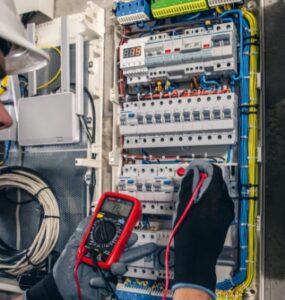
EICR, PAT and Certification Are Not the Same Thing
This is one of the most important points in the whole article.
Businesses often use the terms loosely, but commercial EICR, PAT testing for businesses and electrical certification do different jobs.
A commercial EICR
A commercial EICR checks the condition of the fixed electrical installation.
That includes things like:
- distribution boards
- circuits
- wiring
- accessories
- earthing and bonding
- the overall safety of the fixed installation
PAT testing
PAT testing for businesses focuses on portable electrical equipment. HSE guidance on PAT testing helps explain how inspection and testing fit into a sensible maintenance regime.
That can include:
- kettles
- computers
- monitors
- extension leads
- portable heaters
- chargers
- cleaning equipment
- appliances used around the premises
Electrical certification
Electrical certification applies after certain types of electrical work, additions or alterations.
That may include certification after:
- installing new circuits
- changing distribution boards
- carrying out significant alterations
- upgrading lighting
- adding power supplies
- completing remedial works
So while all three sit under the wider heading of electrical testing for commercial premises, they are not interchangeable.
Where Emergency Light Testing Fits In
On many commercial sites, emergency light testing is another important part of the wider testing picture.
Emergency lighting supports safe exit and visibility when normal power fails. That means businesses often need to keep emergency lighting checks and records organised alongside commercial electrical testing, not as a completely separate thought.
This matters especially in places like:
- offices
- retail units
- hospitality venues
- schools
- healthcare settings
- warehouses with staff areas, corridors or escape routes
If a premises has changed layout, added partitioning, altered routes or updated usage, it makes sense to review whether existing emergency light testing for commercial premises still reflects the way the building now operates.
A business may stay on top of PAT testing and still overlook emergency lighting. Or it may have an older commercial EICR, but the emergency lighting arrangements have changed since then. This is where a more joined-up approach helps.

What Businesses Often Miss After Changes to the Premises
This is where commercial testing often starts falling out of sync with the real site.
A lot of businesses make changes for sensible operational reasons, but do not always stop to think about what those changes mean for inspection, testing and certification.
That can happen after:
- office fit-outs
- retail refits
- new kitchen or catering equipment
- more IT equipment
- added air conditioning
- lighting upgrades
- extra sockets or circuits
- partitioning changes
- tenancy changes
- new staff areas
- expanded storage or warehouse office space
The problem is not always the work itself. The issue is that electrical certification for business premises, testing dates and inspection records can quickly become harder to follow if the electrical setup has changed in stages.
This is why electrical testing for commercial premises should be reviewed after meaningful changes, not just when a certificate expiry date finally becomes impossible to ignore.
How to Keep Electrical Testing for Commercial Premises Under Control
The most practical approach is to stop treating testing as one isolated task and start treating it as part of managing the premises properly.
A business usually stays in a much stronger position when it:
- keeps a clear record of its commercial EICR
- tracks PAT testing for businesses across equipment and teams
- keeps emergency light testing records organised
- stores certificates after upgrades, additions or remedial works
- reviews testing after fit-outs, refits or layout changes
- checks whether older paperwork still reflects current site use
- uses a clear process for electrical inspection and follow-up work
This does not need to become overcomplicated. The goal is simply to make sure the testing history still matches the actual premises.
For larger or busier sites, that joined-up view makes a real difference. It helps businesses avoid scrambling for paperwork later, and it makes it easier to spot when the site has changed enough to justify new inspection or testing.
For businesses trying to manage electrical testing properly, HSE guidance on electrical inspection and testing is a useful reference point alongside site-specific advice from a qualified contractor.
Where testing leads to remedial work, alterations or further inspection, businesses also benefit from using contractors who work in line with the BS 7671 Wiring Regulations.
If you are reviewing contractors as part of a wider compliance or maintenance plan, you may also find our guide on what to look for when hiring a commercial electrician near you useful.
When to Arrange Commercial Electrical Testing Sooner Rather Than Later
Some businesses wait until a reminder letter, a landlord request or an insurance question brings the issue back into view. In practice, there are usually earlier signs that testing needs attention.
It makes sense to arrange commercial electrical testing sooner when:
- the premises has changed since the last inspection
- you are unsure whether existing certificates still apply
- the business has taken over a new unit
- there has been a refit or layout change
- equipment loads have increased
- there are signs of wear, faults or repeated issues
- electrical work has been carried out in stages
- the site has grown without a clear testing review
- emergency lighting arrangements have changed
- you want clearer visibility of what is current and what is overdue
A more proactive approach tends to be easier and less disruptive than dealing with several overdue testing issues at once.
Electrical Testing Support for Commercial Premises in Peterborough and Surrounding Areas
Story Electrical provides electrical testing for commercial premises in Peterborough and across Cambridgeshire, Lincolnshire and Northamptonshire.
We work across sectors including:
- offices
- retail units
- hospitality venues
- warehouses
- schools
- healthcare settings
- other commercial environments
That includes support with:
- commercial EICR
- PAT testing for businesses
- emergency light testing
- electrical inspection
- certification after electrical work
- wider testing, inspection and certification requirements
Where commercial premises have changed over time, the priority is usually not just one certificate. It is making sure the testing and records still reflect the way the site actually operates now.
Get in Touch
Story Electrical – Electrical Testing for Commercial Premises in Peterborough
If your business needs electrical testing for commercial premises, including commercial EICR, PAT testing for businesses, emergency light testing or wider inspection and certification support, we’re happy to discuss the right approach for your site. We support commercial premises across Peterborough, Cambridgeshire, Lincolnshire and Northamptonshire with practical testing and compliance support tailored to real operational needs.
Story Electrical – Commercial and Domestic Electrician
Address: Unit 14, Spitfire Business Park, Northfield Road, Market Deeping, Peterborough PE6 8WE, United Kingdom
Call Us: 01733 913133

About the Author
Mark Story is the founder and director of Story Electrical. His work supports commercial clients across Peterborough, Cambridgeshire, Lincolnshire and Northamptonshire, with practical electrical solutions tailored to real working environments. That includes electrical testing for commercial premises, commercial EICR, PAT testing for businesses, emergency lighting support and wider electrical inspection and certification for a range of commercial sites.
Mark is directly involved in planning and delivering electrical work that helps businesses stay safe, organised and compliant as their premises change over time. That includes supporting offices, retail units, hospitality venues, warehouses, schools and healthcare settings with practical testing, inspection and certification that reflects how each site actually operates.
Under Mark’s leadership, Story Electrical supports businesses across Peterborough and throughout Cambridgeshire, Lincolnshire, Northamptonshire and surrounding areas, while staying true to the values of quality, safety and customer satisfaction that define the company. Story Electrical works to BS standards and holds NAPIT certification, supporting commercial and industrial clients with practical electrical solutions that support safe operation, compliance and long-term reliability.
Frequently Asked Questions
What does electrical testing for commercial premises include?
Electrical testing for commercial premises can include commercial EICR, PAT testing for businesses, emergency light testing, inspection after electrical alterations and certification after electrical work.
What is the difference between EICR and PAT testing?
A commercial EICR checks the fixed electrical installation. PAT testing checks portable electrical equipment and appliances used around the premises.
Do commercial premises need both EICR and PAT testing?
Many do. The answer depends on the type of premises, the equipment in use and the way the site operates. In many business settings, both fixed installation testing and portable appliance testing play a role.
What is emergency light testing?
Emergency light testing checks that emergency lighting operates correctly when needed. It helps businesses confirm that lighting for escape routes and safety areas will perform in the event of normal power loss.
When should a business arrange a new EICR?
A business should arrange a new commercial EICR when inspection is due, when it takes over a premises, after significant changes to the electrical installation, or when the current records no longer reflect the way the site is being used.
Do businesses need certificates after electrical upgrades or alterations?
Yes, businesses should keep the right certification after electrical alterations, additions or upgrades. That paperwork helps show what work was carried out and how it was certified at the time.