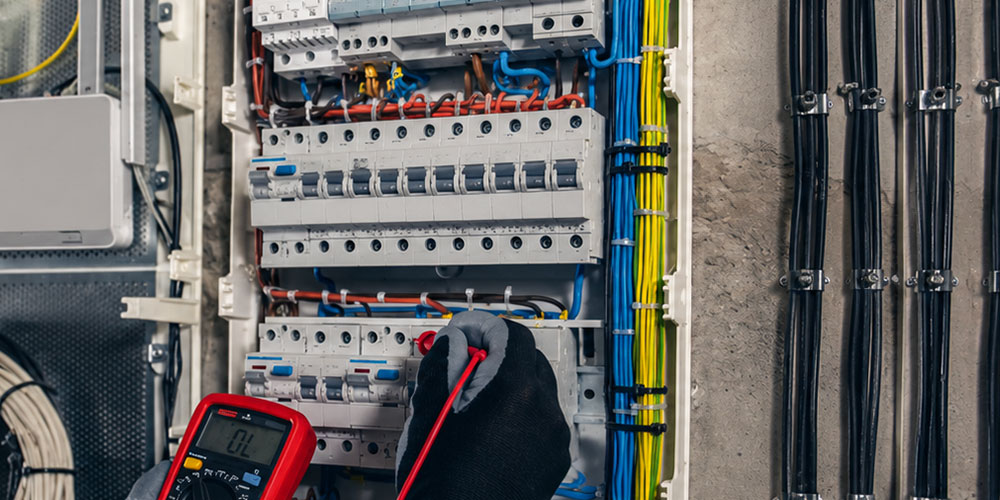
A commercial three-phase installation may become necessary when a business adds machinery, expands its premises or introduces equipment that the existing electrical supply was never designed to support. However, upgrading to three-phase power is not simply a matter of replacing a distribution board or connecting another circuit.
The existing electricity supply, distribution equipment, current electrical demand and future plans all need to be assessed before the work is designed. In some cases, a business may require new circuits or a commercial distribution board upgrade. In others, the incoming electricity supply may also need work from the local Distribution Network Operator.
Story Electrical provides 3-phase installations and distribution board upgrades as part of its wider commercial electrical services. We support offices, workshops, retail units, hospitality venues, warehouses and other commercial premises across Peterborough and surrounding areas, including parts of Cambridgeshire and Lincolnshire.
This guide explains when a business may need more electrical capacity, which types of equipment commonly require three-phase power, and what should be assessed before a commercial three-phase installation begins.
Key Takeaways
- A commercial three-phase installation may be needed when a business adds machinery, specialist equipment or several substantial electrical loads.
- Three-phase power is commonly used for motors, commercial kitchen equipment, compressors, vehicle lifts, HVAC systems and larger EV charging installations.
- Repeated tripping does not automatically mean that a three-phase upgrade is required. The cause should be properly investigated first.
- The existing supply, distribution board, circuits and expected electrical demand should all be assessed before work is planned.
- Some projects require work from both an electrical contractor and the local Distribution Network Operator.
- Story Electrical provides commercial three-phase installations and distribution board upgrades in Peterborough and surrounding areas.
What Is a Commercial Three-Phase Installation?
A commercial three-phase installation supplies electricity across three alternating phases rather than a single phase. In practical terms, this can provide a more suitable arrangement for commercial equipment with substantial electrical demand.
Three-phase power is commonly associated with factories and large industrial sites. However, many commercial premises also rely on it, including:
- vehicle workshops and garages
- commercial kitchens
- hospitality venues
- warehouses and distribution units
- larger retail premises
- schools and healthcare settings
- commercial buildings with substantial heating or cooling systems
- workplaces planning multiple EV charging points
The presence of commercial equipment does not automatically mean that the site needs a new three-phase supply. The decision should be based on the equipment specifications, the current supply, the available capacity and the combined electrical demand of the premises.
A commercial electrician can assess the existing installation and establish whether the project needs new circuits, changes to the distribution equipment or a wider commercial electrical supply upgrade.
Single-Phase vs Three-Phase Power
Many small commercial premises operate successfully from a single-phase electricity supply. This may be suitable where the electrical demand mainly comes from standard lighting, socket outlets and relatively modest equipment.
A three-phase system distributes electrical power across three phases. This makes it particularly useful for certain motors, machinery and other high-load equipment. It can also allow the overall electrical demand to be distributed more effectively throughout the installation.
For a growing business, this may provide greater capacity and flexibility. However, three-phase power is not automatically better for every premises.
Installing a larger supply than the business genuinely needs may add unnecessary work and cost. Before recommending an upgrade, the contractor should assess:
- the existing supply arrangement
- current electrical demand
- planned machinery or equipment
- equipment starting currents
- loads that operate simultaneously
- available distribution-board capacity
- realistic plans for future expansion
UK Power Networks guidance on upgrading an electricity supply explains that customers requiring more power may be able to move from a single-phase to a three-phase supply. It also advises larger businesses to establish their electrical requirements before applying for additional capacity.
Signs Your Business May Need More Electrical Capacity
Businesses do not always notice electrical-capacity limitations until they plan to install new equipment or change how the premises operates.
Signs that the existing supply or installation should be assessed include:
- plans to install equipment that requires a three-phase connection
- limited spare capacity within the current distribution board
- several high-demand appliances operating at the same time
- circuits tripping when machinery or equipment starts
- a workshop adding compressors, lifts or specialist tools
- a commercial kitchen expanding its equipment
- plans to install several commercial EV chargers
- a refurbishment, extension or change of premises use
- temporary electrical arrangements becoming permanent
- planned business growth that the current installation may not support
Repeated tripping should not automatically be treated as proof that the premises needs a three-phase power upgrade. Tripping can result from an overloaded circuit, a fault, unsuitable circuit design or an issue with the connected equipment.
The cause should be investigated before any supply upgrade is proposed. This may involve reviewing the existing installation alongside wider electrical testing for commercial premises, particularly where the condition or capacity of the current electrical system is uncertain.
Which Commercial Premises Commonly Need Three-Phase Power?
A wide range of commercial buildings may use three-phase power. The deciding factor is normally the equipment and total electrical demand rather than the business type alone.
Workshops and vehicle garages
Commercial workshops may use vehicle lifts, compressors, welders, extraction equipment and specialist tools. Some equipment requires a three-phase connection, while other machinery may simply add substantial demand to the existing installation.
Before new workshop equipment is ordered, it is sensible to confirm:
- the required voltage and phase arrangement
- the equipment’s rated current
- starting-current requirements
- whether a dedicated circuit is needed
- the proposed location and cable route
- isolation and control requirements
Commercial kitchens and hospitality venues
Commercial ovens, dishwashers, refrigeration, extraction systems and catering equipment can create considerable electrical demand, particularly when several appliances operate together during busy periods.
A proper load assessment should consider both individual equipment requirements and the likely combined demand.
Warehouses and commercial units
Warehouses may require three-phase power for mechanical handling equipment, loading systems, heating, ventilation, lighting, workshops and EV charging infrastructure.
Changes to the building layout may also introduce new circuits, distribution equipment and cable routes.
Retail and larger office premises
Many smaller shops and offices do not need a three-phase upgrade. Larger premises, however, may have substantial demand from lighting, refrigeration, HVAC, server equipment, lifts, kitchens or EV charging.
Schools and healthcare premises
Schools, clinics and healthcare settings may use catering equipment, ventilation systems, specialist equipment and other important electrical loads. Work in these environments often needs careful planning around occupancy, access and operational requirements.
Story Electrical’s commercial electrical installation services cover offices, retail premises, hospitality venues, warehouses, schools, healthcare settings and other working environments.
Three-Phase Power for Machinery and Commercial Equipment
The installation of machinery or specialist equipment is one of the most common reasons businesses consider a three-phase power installation.
Before equipment is connected, the contractor should review the manufacturer’s technical information and establish:
- whether the equipment requires single-phase or three-phase power
- its normal operating demand
- its starting current
- whether it requires a dedicated circuit
- the required protective devices
- local isolation requirements
- the cable size and route
- how it will affect the site’s total electrical demand
Some motors and machines draw considerably more current when starting than during normal operation. This can influence circuit design and whether the current supply is suitable.
Businesses should avoid ordering expensive machinery before confirming that the premises can support it. An early electrical assessment can identify potential supply work, distribution-board changes and installation costs before they delay the project.
Where machinery forms part of a larger refurbishment or change of premises, the work may also connect with a wider commercial electrical fit-out.
Will You Need a Commercial Distribution Board Upgrade?
Many three-phase projects involve changes to the distribution equipment, but the exact work depends on the existing installation.
An assessment may identify the need for:
- a new three-phase distribution board
- additional protective devices
- new dedicated circuits
- reorganisation or replacement of existing distribution equipment
- suitable isolation arrangements
- new cabling and containment
- improved circuit labelling and schedules
- better distribution of loads across phases
A commercial distribution board upgrade may be necessary where the current board is ageing, lacks suitable spare ways or cannot support the proposed equipment.
The board should not be assessed in isolation. The contractor also needs to consider the incoming supply, earthing arrangements, protective measures, existing cables and the loads connected throughout the premises.
Story Electrical lists both distribution board upgrades and 3-phase installations among its commercial services. This means the two areas can be assessed together where a business needs additional electrical capacity.
On larger warehouse or production sites, similar planning principles may also apply to wider power distribution and switchgear for growing sites.
What Is Involved in a Commercial Electrical Supply Upgrade?
A commercial electrical supply upgrade should begin with an assessment rather than a standard quotation based only on the property type.
The contractor may need to establish:
- What electricity supply is currently available?
- How much electrical demand does the business use now?
- What new machinery or equipment will be added?
- Which major loads operate at the same time?
- Is further expansion likely?
- Is the existing distribution equipment suitable?
- Does the incoming network supply need changing?
- Can the installation be phased around normal operations?
The work may involve:
- inspection of the existing commercial electrical installation
- reviewing equipment specifications
- calculating the expected electrical demand
- checking available supply capacity
- assessing existing distribution boards and circuits
- planning new cable routes and containment
- liaising with the Distribution Network Operator where necessary
- agreeing shutdown periods
- installation, inspection, testing and certification
Commercial electrical installation work should be designed, installed, inspected and tested in line with applicable requirements. The IET describes BS 7671 as the UK national standard for electrical installations.
The Electrical Contractor and Network Operator
There are often two distinct areas of responsibility within a three-phase supply project.
Electrical work inside the premises
The electrical contractor will normally assess and complete work such as:
- distribution boards
- final circuits and sub-mains
- cabling
- isolators
- containment
- machinery and equipment connections
- inspection, testing and certification
Changes to the incoming electricity supply
Where the existing incoming supply needs changing, the relevant Distribution Network Operator may need to complete or approve that part of the project.
For many premises in and around Peterborough, this is likely to involve UK Power Networks. However, the network operator should always be confirmed for the individual property.
UK Power Networks’ guidance for large commercial properties recommends contacting an electrical contractor first, as the contractor can help establish how much additional power the business requires.
The electrical contractor and network operator perform different roles. A competent contractor can help the business understand which work falls on each side of the supply and what technical information may be required.
Three-Phase Power and Commercial EV Charging
Several workplace or fleet EV chargers can add substantial demand to a commercial electrical installation.
A three-phase supply may make it easier to distribute charging demand, but it does not remove the need for proper planning. The installer should still consider:
- the proposed number and rating of chargers
- vehicle dwell times
- when charging will take place
- the building’s existing electrical demand
- available supply capacity
- phase balancing
- dynamic load management
- future staff or fleet growth
Three-phase power may form part of the charging solution, but load management can sometimes reduce or delay the need for a larger supply upgrade.
Businesses planning charging infrastructure can also read our guides to fleet EV charging installation and how many EV chargers a business may need.
Planning the Installation Around Your Business
Commercial electrical work needs to account for the way the premises operates. A safe and technically suitable installation still needs to be planned around staff, customers, deliveries, machinery and normal business activity.
A workshop may not be able to lose power during opening hours. A commercial kitchen may need shutdowns arranged outside service times. Warehouses may need loading areas and pedestrian routes to remain accessible.
Before the project begins, planning should cover:
- working hours and access arrangements
- required power shutdowns
- access to existing distribution equipment
- safe working zones
- machinery delivery and commissioning dates
- coordination with builders and equipment suppliers
- inspection and testing
- the sequence of phased installation work
- reinstatement and cleaning
Where practical, the project may be divided into phases to reduce disruption. However, the appropriate sequence depends on the existing installation and the proposed equipment.
The Health and Safety Executive’s guidance on electrical equipment and installations states that people working on electrical machinery, equipment and installations must be competent for the work they perform.
Once the installation is complete, the business should retain the relevant certificates, schedules and test documentation for future maintenance and alterations.

Planning for Future Commercial Expansion
A three-phase project should address the immediate requirement while also considering realistic future plans for the business.
Future requirements might include:
- additional machinery
- more workshop bays
- an extended commercial kitchen
- new heating or cooling equipment
- additional EV chargers
- warehouse expansion
- a changed tenant layout
- new office, retail or production space
This does not mean installing excessive capacity simply in case it is needed. It means discussing foreseeable changes early enough to avoid obvious restrictions or repeated alterations.
A three-phase upgrade may form part of wider commercial electrical installations, particularly during a refurbishment, expansion or change of use.
Before altering an existing installation, Story Electrical can assess the current supply, distribution equipment and proposed electrical demand.
Why Choose Story Electrical for Commercial Three-Phase Work?
Story Electrical supports businesses with practical commercial electrical work across Peterborough and surrounding areas.
Reasons businesses choose Story Electrical include:
- NAPIT-certified electrical contractor
- City & Guilds Level 3 qualified electricians
- experience across commercial and domestic electrical projects
- clear, detailed quotations
- professional work planned around the premises
- clean and tidy working practices
- local support from Market Deeping and Peterborough
- experience with distribution boards, commercial fit-outs and 3-phase installations
Every commercial property has different electrical requirements. The appropriate solution should be based on the condition of the existing installation, the equipment being added and the way the premises operates.
Commercial Three-Phase Installation in Peterborough
Story Electrical provides commercial three-phase installation in Peterborough and surrounding areas, including parts of Cambridgeshire and Lincolnshire.
Our wider commercial electrical services include:
- 3-phase installations
- commercial distribution board upgrades
- full electrical fit-outs
- power and data installations
- LED lighting design and installation
- emergency lighting and fire alarm systems
- commercial EV charging
- testing, inspection and certification
- energy-saving electrical solutions
We work across offices, shops, hospitality venues, workshops, warehouses, schools, healthcare premises and other commercial environments.
A site assessment can establish whether the business genuinely needs three-phase power, whether the incoming supply is suitable and what wider commercial electrical installation work may be required.
Does Your Business Need a Three-Phase Upgrade?
A commercial three-phase installation may be needed when a business adds machinery, expands its premises or introduces several high-demand electrical loads.
However, three-phase power should not be recommended from one symptom or assumption alone. The existing supply, distribution equipment, connected loads and future plans should all be assessed first.
For some businesses, the project may involve a new three-phase distribution board and dedicated circuits. For others, it may require a wider supply upgrade involving the Distribution Network Operator.
Story Electrical provides three-phase installations, distribution board upgrades and wider commercial electrical installations for businesses across Peterborough and surrounding areas.
Get in Touch
Story Electrical – Commercial Three-Phase Installation in Peterborough
Are you adding machinery, expanding your commercial premises or concerned that the existing electrical supply may no longer meet your business requirements?
Story Electrical can assess the installation and advise whether the project requires new circuits, a commercial distribution board upgrade or a wider three-phase power installation.
We support businesses across Peterborough and surrounding areas, including parts of Cambridgeshire and Lincolnshire.
Story Electrical – Commercial and Domestic Electrician
Address: Unit 14, Spitfire Business Park, Northfield Road, Market Deeping, Peterborough PE6 8WE, United Kingdom
Call: 01733 913133

About the Author
Mark Story is the founder and director of Story Electrical. He works with commercial and industrial clients in Peterborough and surrounding areas, delivering practical electrical solutions for working premises.
His work includes commercial electrical installations, distribution board upgrades, three-phase installations, electrical fit-outs and wider power requirements for growing businesses.
Story Electrical is NAPIT certified, and its electricians hold City & Guilds Level 3 qualifications.
Frequently Asked Questions
What is a commercial three-phase installation?
A commercial three-phase installation supplies electricity across three alternating phases. It is commonly used where premises need to operate machinery, motors or several substantial electrical loads.
How do I know whether my business needs three-phase power?
Your business may need an assessment if it is adding three-phase machinery, high-powered commercial equipment, several EV chargers or other substantial electrical demand. A contractor should assess the expected load before recommending an upgrade.
Can repeated tripping mean that I need a three-phase upgrade?
Not necessarily. Repeated tripping can result from faults, overloaded circuits, equipment problems or unsuitable electrical design. The cause should be investigated before a supply upgrade is recommended.
Does a three-phase installation require a new distribution board?
It may. The existing distribution board, spare capacity, protective devices and planned circuits all need to be assessed. Some projects require a new three-phase distribution board, while others may need different alterations.
Who upgrades the incoming electricity supply?
Changes to the incoming network supply are generally handled by the local Distribution Network Operator. The electrical contractor normally assesses the business requirements and completes the electrical installation within the premises.
Can three-phase power support workplace EV chargers?
Yes. A three-phase supply can help distribute charging demand across phases. However, charger numbers, existing building demand, available capacity and load management still need to be assessed.
How long does a commercial three-phase installation take?
Timescales depend on the existing supply, distribution equipment, cable routes, operating restrictions and whether the Distribution Network Operator needs to complete additional work. A site assessment is needed before an accurate programme can be provided.
Do you provide commercial three-phase installation in Peterborough?
Yes. Story Electrical provides 3-phase installations and distribution board upgrades for businesses in Peterborough and surrounding areas, including parts of Cambridgeshire and Lincolnshire.