Industrial power distribution and switchgear should be reviewed before expanding a factory, warehouse or industrial unit. If new machinery, extra load, lighting upgrades, HVAC changes or EV charging are being added, the existing electrical infrastructure needs assessing before work starts.
If that review is left too late, businesses can run into capacity issues, project delays, safety concerns and reactive upgrade costs that are far more disruptive than early planning.
On industrial sites, growth often exposes problems that were already there. A board that has coped for years can become a weakness once extra plant is added. A distribution setup that worked when one area was lightly used may no longer suit a busier layout or a different operating pattern.
In practice, a lot of avoidable downtime happens when businesses outgrow their electrical setup without reviewing how power is actually being distributed across the site.
At Story Electrical, we work with industrial and commercial clients in Peterborough and across Cambridgeshire, Lincolnshire and Northamptonshire through our industrial electrical services, supporting the infrastructure behind site growth. That includes industrial power distribution and switchgear, panel upgrades, load balancing, new sub-mains and wider electrical upgrades for industrial premises that need to keep operating safely while capacity increases.
Key Takeaways
- Industrial power distribution and switchgear should be reviewed before expanding a factory, warehouse or industrial unit.
- Common triggers include new machinery, extra electrical load, HVAC changes, lighting upgrades, site reconfiguration and EV charging.
- Warning signs include full panels, limited spare capacity, nuisance tripping, uneven phase loading, ageing switchgear and temporary electrical workarounds becoming permanent.
- Load balancing, panel upgrades and new sub-mains often play a major role in safe site expansion.
- Early electrical planning helps avoid downtime, project delays and expensive reactive upgrade work.
- For industrial sites in Peterborough and the surrounding counties, infrastructure-led planning can make the difference between a controlled expansion and a costly disruption.
What Industrial Power Distribution and Switchgear Actually Cover
Industrial power distribution and switchgear cover the systems that receive, control, protect and distribute electrical power around a site.
That includes:
- incoming electrical supplies
- main switchgear
- distribution boards
- panels
- sub-main cabling
- isolation points
- protective devices
In simple terms, this is the part of the installation that decides how power gets from the supply to the areas that need it, and how that power is controlled under normal use and fault conditions.
On factories and warehouses, this infrastructure usually sits behind everything else. When it is designed properly, people rarely think about it. When it is undersized, outdated or badly arranged, it starts affecting production, maintenance, safety and future expansion.
Three-phase power distribution is a major part of this on industrial premises. Many sites rely on it to run:
- machinery
- process equipment
- compressors
- HVAC systems
- automation equipment
- higher-demand plant
Once a site starts growing, the question is no longer just whether electricity is available. The real question is whether the existing industrial electrical infrastructure is still suitable for the way the site now operates.
Why Growing Sites Outgrow Existing Industrial Power Distribution and Switchgear
Sites do not usually outgrow their electrical infrastructure all at once. It tends to happen gradually.
A production line is added. A mezzanine is fitted out. Warehouse lighting is upgraded. A new roller shutter, extractor system, heating plant or charging setup goes in. Individually, each change may seem manageable. Over time, though, they place more pressure on the existing system.
That is where power distribution for industrial sites needs a proper review.
We often see sites where the original setup was designed for an earlier phase of the building, not for how the operation looks now. Panels may have little spare capacity left. Existing cable routes may not suit the new layout. Distribution may be uneven across the site.
What looks like a small electrical addition on paper can expose a much bigger issue in the background.
For factories and warehouses, switchgear should be considered as part of growth planning, not just as a maintenance item. If expansion depends on reliable uptime, the electrical backbone needs to support the next phase without guesswork.
Signs Your Site May Need an Industrial Switchgear Upgrade
A site may need an industrial switchgear upgrade before failure happens. In most cases, the warning signs show up earlier.
Common signs include:
- distribution boards with little or no spare capacity
- nuisance tripping under load
- older panels or switchgear with ageing components
- heat build-up
- repeated maintenance issues
- difficulty sourcing compatible parts
- temporary additions becoming permanent workarounds
- uneven loading across phases
- new machinery being planned without confirmed available capacity
If a factory or warehouse is already relying on short-term fixes, that usually points to a wider infrastructure issue rather than a one-off problem.
Businesses should also pay attention when expansion plans involve major electrical changes, even if the current system seems stable. New machinery, HVAC demand, process changes, lighting upgrades or EV charging can all alter load patterns significantly.
In those cases, panel upgrades and a wider switchgear review may be needed before new equipment goes anywhere near the site.
What to Assess in Industrial Power Distribution and Switchgear Before Expanding
Before expanding a factory or warehouse, the first step is to understand the site as it operates now, not just as it was originally designed.
That means reviewing:
- existing electrical loads
- how those loads are distributed
- where spare capacity exists
- how much new demand is being added
- whether the present arrangement supports the next stage safely
A proper assessment should usually include:
- the incoming supply
- the age and condition of the existing switchgear
- available capacity in panels and boards
- the performance of existing sub-mains
- cable sizing
- fault protection
- isolation strategy
- the practical layout of the building
- how the work can be phased on a live site
If the site is operational, phasing and continuity planning matter just as much as technical design. There is no point producing a neat design on paper if the installation sequence causes unnecessary disruption to production or operations. Industrial electrical work should also align with relevant standards such as the BS 7671 Wiring Regulations.
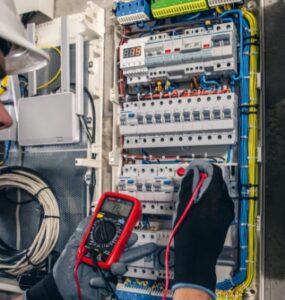
This is where larger businesses benefit from involving an industrial electrical contractor early. Electrical upgrades for industrial premises are rarely just about adding one more circuit. On live industrial sites, every decision affects operations, future maintenance and how easily the site can continue growing after the current project is finished.
Why Load Balancing and New Sub-Mains Matter in Industrial Power Distribution
Load balancing for industrial sites matters because uneven demand across phases can affect performance, efficiency and resilience.
On three-phase power distribution systems, balance is not just a technical extra. It is part of making sure the infrastructure performs properly under real operating conditions.
When a site grows in an unplanned way, loads often end up added wherever it seemed easiest at the time. That can leave some parts of the distribution system doing more than they should, while others remain underused.
Reviewing load distribution during expansion helps to:
- reduce avoidable strain on the system
- improve phase balance
- support better performance under load
- create a clearer basis for future upgrades
New sub-mains are another common requirement on industrial sites.
They are often needed when power has to be distributed to:
- new warehouse areas
- plant extensions
- external buildings
- mezzanine levels
- separate operational zones
- reconfigured parts of a site
In many cases, new sub-mains are a cleaner and more scalable solution than trying to stretch an older setup beyond what it was intended to do.
Why Early Electrical Planning Helps Avoid Downtime and Reactive Costs
One of the biggest mistakes on industrial projects is leaving the electrical review too late.
By the time a new production line is due on site or the fit-out programme is already moving, options become narrower and more expensive. That is when reactive decisions get made, temporary fixes creep in and downtime becomes harder to avoid.
Early planning gives you time to:
- assess capacity properly
- decide whether a switchgear upgrade is needed
- plan panel upgrades
- allow for procurement lead times
- sequence works around operations
- coordinate electrical design with the wider project
- reduce the risk of last-minute infrastructure surprises
For industrial businesses, downtime is not just inconvenient. It affects output, staffing, delivery schedules and customer commitments. Early planning also helps businesses meet their wider responsibilities under the Electricity at Work Regulations.
That is why infrastructure-led planning is usually far better value than firefighting once the project is already underway.
If your priority is reducing faults, improving uptime and keeping existing infrastructure working reliably, you may also find our guide to industrial electrical maintenance useful.
Industrial Power Distribution and Switchgear Projects in Practice
In practice, industrial power distribution and switchgear work is rarely one-size-fits-all.
One site may need a switchgear replacement because the existing equipment is no longer suitable for the current load and future plans. Another may need panel upgrades and new sub-mains to support a phased warehouse expansion. Another may be operating today, but poorly arranged for the next stage of growth.
That is why practical site review matters.
A factory adding heavier machinery has different priorities from a warehouse increasing automation, upgrading lighting and introducing EV charging for fleet vehicles. The common thread is the same: the electrical infrastructure has to be reviewed as part of the wider operational plan, not treated as an afterthought.
The best outcomes usually happen when the electrical scope is defined early, based on:
- actual load demand
- realistic growth plans
- site layout
- operational constraints
- safe delivery in a live environment
Choosing an Industrial Electrical Contractor for Power Distribution and Switchgear Work
For this kind of work, businesses need more than somebody who can simply install what has been specified.
They need an industrial electrical contractor who understands how power distribution affects:
- live operations
- future expansion
- maintenance access
- safety
- site resilience
That means looking for:
- practical industrial experience
- a sensible approach to planning and phasing
- familiarity with three-phase power distribution
- the ability to assess existing infrastructure properly
- clear communication with site managers, facilities teams and project stakeholders
At Story Electrical, our approach is grounded in real site requirements. We design, supply and install industrial power distribution systems and switchgear tailored to the way a site actually functions.
That includes:
- panel upgrades
- new sub-mains
- load balancing
- infrastructure reviews
- electrical upgrades for factories and warehouses
We carry out work to BS standards and are NAPIT-certified. On industrial power distribution projects, that matters because safety, performance and future capacity all need to be considered from the start. With commercial experience, qualified electricians and a practical approach to planning, we help businesses develop electrical infrastructure that supports safe operation and future growth.
If you are reviewing contractors for a live site or larger project, you can also read our guide on how to choose an industrial electrician in Peterborough.
Industrial Power Distribution and Switchgear Support in Peterborough and Surrounding Counties
Story Electrical supports industrial and commercial clients in Peterborough and across Cambridgeshire, Lincolnshire and Northamptonshire.
If your site is planning:
- a factory expansion
- a warehouse extension
- new machinery installation
- a distribution upgrade
- additional three-phase demand
- new sub-mains
- a wider electrical infrastructure review
then the right time to assess industrial power distribution and switchgear is before the existing setup starts limiting the project.
Whether the issue is ageing switchgear, restricted panel capacity, uneven load distribution or the need to supply new parts of the site safely, the aim is the same: make sure the electrical infrastructure is fit for the way the site operates now and where it is heading next.
For industrial and commercial sites in Peterborough and the surrounding counties, that kind of early review can make the difference between a controlled upgrade and an expensive disruption.
Get in Touch
Story Electrical – Industrial Power Distribution and Switchgear in Peterborough
If your site is planning industrial power distribution and switchgear work, an industrial switchgear upgrade, panel upgrades, new sub-mains or wider electrical upgrades for industrial premises, we’re happy to discuss the right approach for your site. We support factories, warehouses and commercial businesses across Peterborough, Cambridgeshire, Lincolnshire and Northamptonshire with practical, compliant electrical infrastructure solutions tailored to real operational needs.
Story Electrical – Commercial and Domestic Electrician
Address: Unit 14, Spitfire Business Park, Northfield Road, Market Deeping, Peterborough PE6 8WE, United Kingdom
Call Us: 01733 913133

About the Author
Mark Story is the founder and director of Story Electrical. With over eight years of hands-on industry experience, Mark has built the business on a foundation of professionalism, reliability and practical service. His technical expertise covers industrial power distribution and switchgear, three-phase power distribution, panel upgrades, new sub-mains and wider electrical infrastructure planning for factories, warehouses, industrial premises and commercial sites.
Mark is directly involved in planning and delivering projects that require careful consideration of electrical capacity, compliance and long-term reliability – from assessing existing switchgear and planning phased upgrades to supporting site expansion with practical solutions that suit the way industrial and commercial premises actually operate. He ensures each installation, upgrade, inspection and testing service meets high standards of safety and workmanship, with a strong focus on reliable performance, future capacity and minimal disruption to live environments.
Under Mark’s leadership, Story Electrical supports businesses across Peterborough and throughout Cambridgeshire, Lincolnshire, Northamptonshire and surrounding areas, while staying true to the values of quality, safety and customer satisfaction that define the company. Story Electrical works to BS standards and holds NAPIT certification, supporting commercial and industrial clients with practical electrical solutions that improve safety, support compliance and deliver long-term reliability.
Frequently Asked Questions
What is industrial switchgear?
Industrial switchgear controls, isolates and protects electrical power systems on industrial premises. It helps distribute power safely and protects the installation during faults or abnormal conditions.
When does a factory need a switchgear upgrade?
A factory may need a switchgear upgrade when it adds machinery, increases electrical load, runs out of panel capacity, deals with ageing equipment, experiences nuisance tripping or plans an expansion that the existing infrastructure may not support safely.
Can businesses expand industrial power distribution in phases?
Yes. Businesses can expand industrial power distribution in phases, especially on live sites where teams need to plan the work around operations. The key is making sure the design allows for future capacity and practical sequencing.
What happens if a site outgrows its electrical capacity?
If a site outgrows its electrical capacity, it can face overload risks, performance problems, delayed expansion, unplanned shutdowns and more expensive reactive upgrade work. That is why businesses should assess capacity before adding new demand.
What happens if a site outgrows its electrical capacity?
If a site outgrows its electrical capacity, it can face overload risks, performance problems, delayed expansion, unplanned shutdowns and more expensive reactive upgrade work. That is why businesses should assess capacity before adding new demand.
When does an industrial site need new sub-mains?
Businesses often need new sub-mains when they extend power to new areas, additional buildings, upgraded plant zones or reconfigured parts of a site. New sub-mains help distribute power more effectively without overloading the existing arrangement.